Find out what a competitive exam is and how to study successfully. Our guide covers exam types, formats, and tips on how to pass your exams.
Introduction:
Competitive exams in India may seem scary at first, but gaining insight into what competitive exams are and how they work can help you understand the process and get you on the road to success. Whether you are studying for college entrance competitive exams in India, professional certifications, or hiring examinations for government jobs, this guide is for you to navigate your way through the world of competitive exams. These exams are the gates to numerous opportunities, and once you prepare well, you can open the doors to your future dreams. Let’s dive into the information you need to know in order to excel in these competitive exams india.
If you ever wondered, “What is a competitive exam?” don’t worry, you are not the only one.
A competitive exam is a formal test designed to measure the ability and potential of candidates in a particular field. Competitive exams are used in all industries, including education, employment placement, such as government jobs, and professional certifications, in an attempt to select the best candidates.
💡 The Core Definition: Think of a competitive exam as a benchmark. It measures your knowledge and skills against thousands of others to make sure that only the most capable individuals proceed to the next phase of their academic or professional careers.
The Purpose of Competitive Exams
Why do these exams exist? The primary purpose is to shortlist candidates based on merit rather than any other consideration.
Fairness: They guarantee a transparent selection process where everyone has an equal opportunity to succeed based purely on performance.
Quality Standard: These exams push candidates to stay up-to-date and achieve high levels of proficiency, maintaining a standard of excellence in the workforce.
Types of Competitive Exams
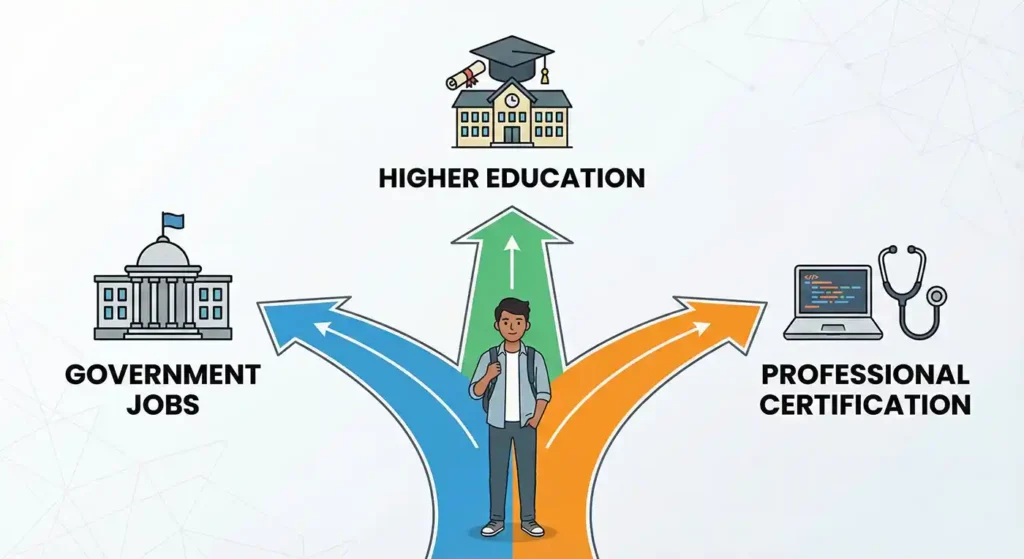
There are various types of competitive exams, which cater to different needs and sectors. Some of the most common categories include:
1. Educational Entrance Exams:
These are entrance exams like the SAT, ACT, or GRE, which are mandatory for admission to college and university. They assess if a student is ready for higher studies by evaluating critical thinking, problem-solving skills, and subject knowledge.
2. Government Job Exams Exams:
Tests like the UPSC, SSC, PSC in India or the US Civil Service Exam are the most important for students who want to work in the public sector. The exams generally cover a broad range of topics, from general knowledge, logical reasoning to analytical reasoning and special topics related to the job.
3. Professional Certification Tests:
Occupations like IT, finance, and medicine typically require certification tests, i.e., the CPA for accountants or the NCLEX for nurses. The certifications play an important role in confirming professional skills and adherence to industry norms.
These kinds of exams all have a unique purpose and require tailored preparation strategies in order to pass.
💡 Pro Tip: Many government and entrance exams heavily weight their scoring on Logical Reasoning. If you find patterns and analytical questions difficult, you are not alone – it is the #1 section where students lose marks.
Competitive tests are generally standardized, utilizing multiple-choice questions (MCQs), essays, or practical assessments. Understanding the specific format of your exam is the first step in your preparation strategy.
One acronym you will hear often is CBRT. This stands for Computer-Based Recruitment Test.
Efficiency: Instead of pen and paper, the test is taken on a computer, which speeds up grading and reduces human error.
Adaptive Testing: Modern CBRTs often use “adaptive testing.” If you answer a question correctly, the next one might be slightly harder (and worth more marks). If you answer incorrectly, the next might be easier. This accurately measures your true skill level.
2. The Role of Standardization
Standardization is the “fairness engine” of competitive exams. It guarantees that every single candidate is tested under the exact same conditions.
Reliability: It guarantees that results are comparable across different groups of students.
Minimizing Bias: Strict procedures prevent external influences from affecting your score, keeping the credibility of the selection process intact.
Preparing for Competitive Exams
Preparation is everything. To perform well, you need a strategy that goes beyond just “reading books.”
Here is a 4-step framework to guide your studies:
1. Know the Exam Pattern
Each competitive exam has unique format and set of guidelines. Become aware of the pattern, type of questions, and duration of time. This way, you will know how to manage your time on the test day effectively. This knowledge also helps you identify areas (like Logical Reasoning) where you should give your best so that you can schedule your studies accordingly. In addition, being familiar with the format will help reduce anxiety since you will know what to expect on test day.
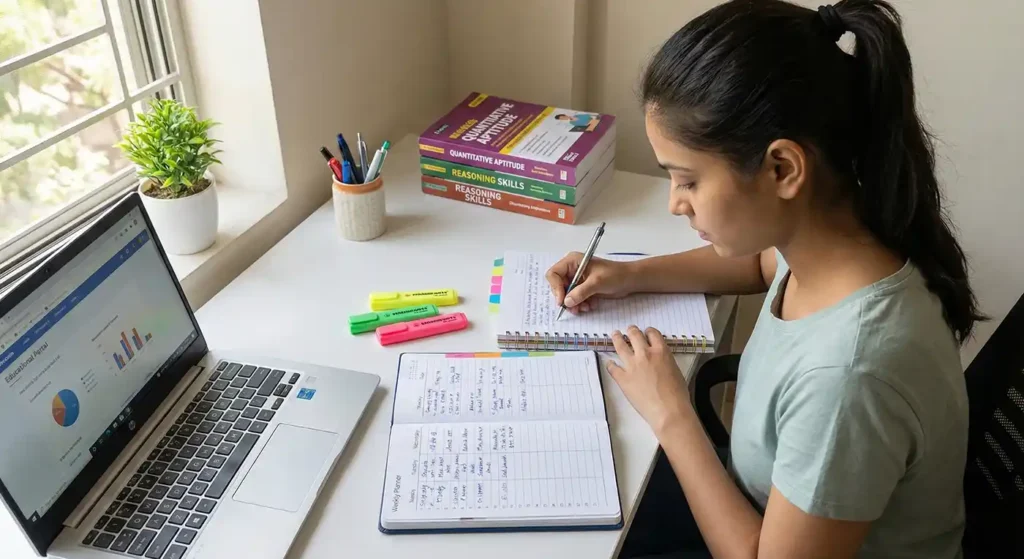
2. Create a Study Schedule
An effective study schedule is your key to success. Set specific times for studying different subjects or topics and stick to your schedule. Consistent study habits can help improve your performance drastically. Break your study period into manageable chunks, learning one subject or topic at a time to avoid being overwhelmed. Regular revision and self-assessment can help reinforce your understanding and avoid losing information. Remember to make changes in your study schedule if necessary, leaving space for the unforeseen challenges or opportunities for deeper learning.
3. Practice with Mock Tests
Taking mock tests is one of the best ways to prepare. Practice tests replicate the actual test environment, allowing you to be comfortable with your skills and identify some of your weaknesses and focus efforts on strengthening them. Consistent practice with mock tests can enhance speed, accuracy, and test readiness over time.
4. Master Time Management
Time management is very important in competitive tests. Practice questions within a specific time to improve your speed and accuracy. You will come to realize how much time to spend on every question over time. Time management also involves distributing questions based on their level of difficulty and marks. By taking exams under timed situations, you will get used to making quick decisions on whether to leave a challenging question, optimizing your scoring potential.
Success Tips for Aspiring Candidates
Success isn’t just about studying; it is about mindset.
Remain Healthy and Balanced A healthy mind results from a healthy body. Ensure that you are well-nourished, well-trained, and well-rested. The balance is the secret, don’t let stress prevail over you during your studies. Incorporate relaxation techniques such as meditation or deep breathing into your routine to keep stress levels under control. Your body and mind are as important as your studying, so please take care of yourself so that you can deliver your best.
Stay Positive Positive thinking is a major difference. Believe in yourself and stay positive. All you need to know is that every step you take, you are closer to the target. Surround yourself with people who encourage your journey and value your achievements. Positive thinking can help you overcome the obstacles and stay concentrated despite odds. Visualization techniques, where you imagine that you are scoring well in the exam, can also boost your confidence and positivity.
Seek Guidance When Needed It is not necessary to fight alone. Be brave enough to seek help when you are struggling with a particular subject or topic. Join study groups, pursue online courses, or consult teachers or mentors. Gaining knowledge from others can introduce new concepts and styles, resolving puzzling concepts. Courses like logical reasoning online can also offer personalized methods and support tailored to your specific needs. Don’t forget, requesting assistance is a sign of strength, not weakness, and can be an important factor in achieving your goals.
Common Mistakes to Avoid
Even the smartest students fail because of these simple errors. Be careful!
Procrastination One of the biggest risks is procrastinating until the last minute. Start early and stick to your plan. Procrastination will put unnecessary pressure and tension, which will ultimately impact your performance negatively. Breaking up your study material into small parts and working on them consistently over time will reduce the pressure and ensure a thorough understanding of the concept.
Ignoring Instructions Always read the exam instructions very carefully. Misunderstanding guidelines can lead to unnecessary mistakes and affect your overall score. Pay attention to details such as question formats, marking schemes, and any specific requirements for each section. Taking a bit of time to go over instructions in detail might prevent silly mistakes and help you get the maximum marks.
Overloading Your Schedule While learning is important, don’t overcrowd your schedule. Too much work can lead to burnout and decrease your productivity. Take some time to relax and take it easy. Alternate your study period with leisure activities and socializing to lead a balanced life. Remember, quality is more important than quantity, so focus on productive study sessions rather than long hours of ineffective cramming.
Conclusion: Your Future Awaits
Competitive exams may seem scary, but with the right attitude and approach, you can pass them. You now understand what they are, how they are designed, and how to prepare. Start early, stay organized, and give it your best shot. Focus on the process with confidence and remember to enjoy the small wins along the way.
Are you ready to start your preparation?
Logical Reasoning is often the “make or break” section for many competitive exams. Don’t leave your results to chance.